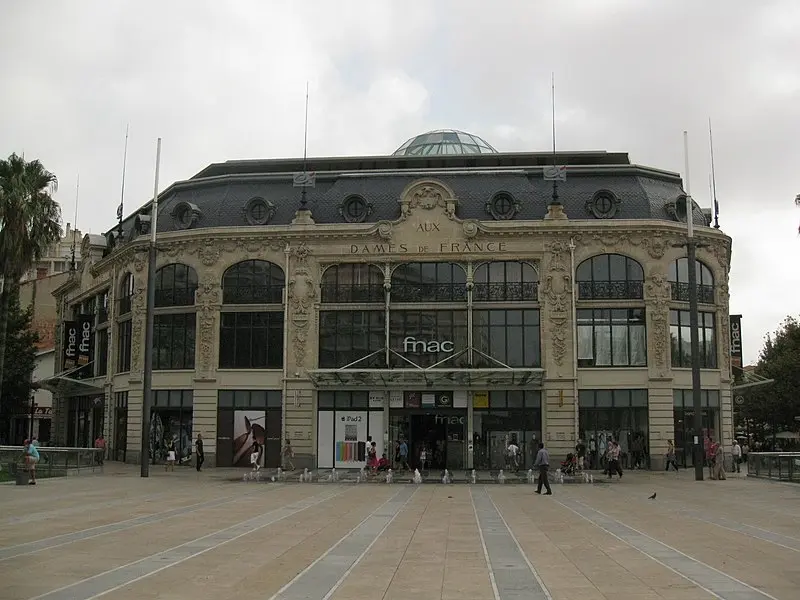
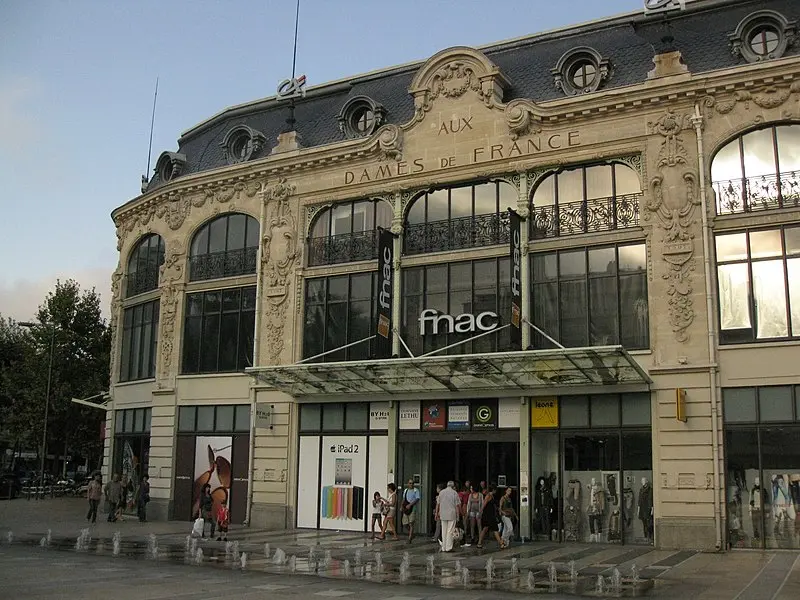
Perpignan : Former store at the Dames de France
Pyrénées-OrientalesReference
PA66000007
Latitude
42.69853964
Longitude
2.88847434
Address
5001 F Rue Pierre Curie 66000 Perpignan
Construction era
1er quart 20e siècle
Protection date
1999/06/24 : inscrit MH
Protection cause
Façades et toitures (cad. AO 171) : inscription par arrêté du 24 juin 1999
Description
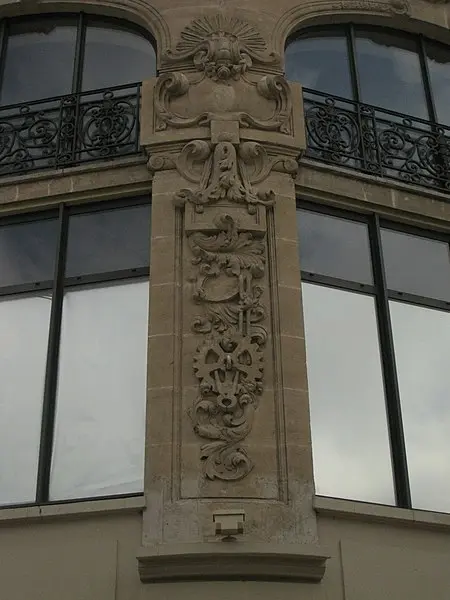
The first department stores were born in Paris at the beginning of the 19th century, with the opening of the Grand Bazaar in 1825, followed later by establishments in the provinces, such as the Grand Bazaar de Lyon in 1855. These stores, intended for a rich clientele, have sumptuous sets, large interior spaces, as well as the most advanced technical equipment, such as elevators and electric lighting. The ladies of France in Perpignan were built between 1905 and 1907 by the architect Georges Debrie and the entrepreneur M. Pourxet, on behalf of the company Paris-France. The new building is located at the eastern entrance to the city, along the avenue de la Gare, near the Place de Catalonia, created at the same time. The store had a daring dome-shaped canopy, unfortunately destroyed in 1963. The building includes two floors above the ground floor as well as an attic floor, with a Pentagonal Plan Configuration. The three main facades have an identical elevation: the ground floor with windows separated by sections of walls; the floor with large curved windows (sales areas); And the floor of the attic, covered with a slate roof with Brisis and lit by a series of oculi. The main entrance is surmounted by a curved pediment decorated with garlands, where the inscription "at the ladies of France" is located. The decoration is mainly concentrated on the main facades upstairs of the large bays (the rear facades being devoid of) and includes cartridges, garlands, floral motifs, as well as symbols celebrating the industrial revolution.