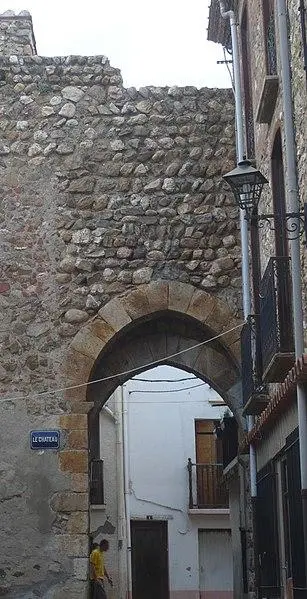
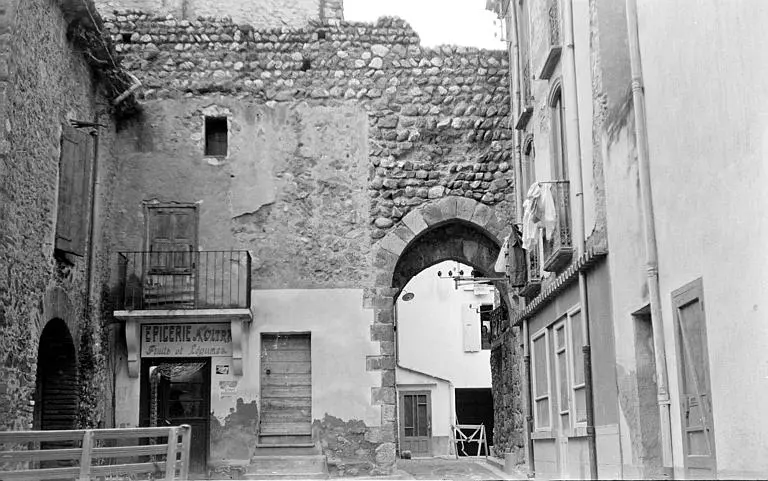
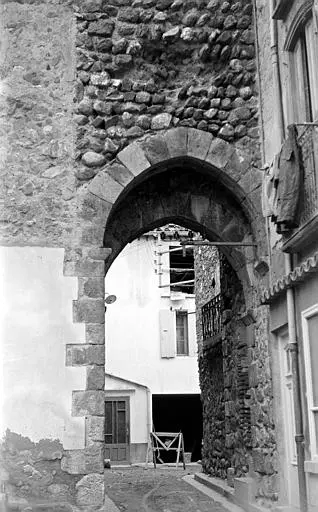
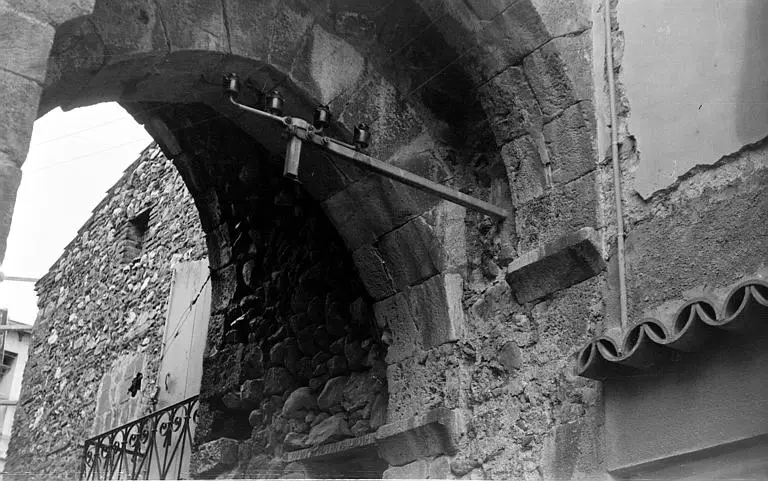
Fourques : Fortified door
Pyrénées-OrientalesReference
PA00104031
Latitude
42.5817
Longitude
2.7783
Address
23 Rue du Château 66300 Fourques
Construction era
13e siècle;14e siècle
Protection date
1984/10/08 : inscrit MH
Protection cause
Porte fortifiée, ainsi que les remparts contigüs (cad. A 155) : inscription par arrêté du 8 octobre 1984
Description
The residents of Fourques were directly under the authority of the King of Mallorca. In the 14th century, the lordship was sold by Queen Yolande d'Aragon. The archives rarely mention the city's ramparts. There are only these fortifications there are a few sections of walls built in river pebbles, supporting a very narrow round path without cantilever. The fortified door is made of the same type of large pebbles arranged in epis, placed without brick chains, which suggests the lack of Mayorquine influence. The broken arcs, with a vertical joint at the top, indicate that they date from a relatively recent era, rather from the end of the 13th century than its environment. The exterior entrance or has two successive arches, separated by a jaw, with the first arc higher than the second, both supported by inclined crows. The vault inside, in slightly broken cradle, has a top arc with a key, without charges to births. It supports a much broader rounder than that visible on certain vestiges of the walls. Under the passage, at the back of the entrance, there are vestiges of a niche.