

Plouasne : Château de Caraudeuc (also in the communes of Longaulnay (35) and Saint-Pern (35))
Côtes-d'ArmorReference
PA00089458
Latitude
48.293689
Longitude
-1.958502
Address
5619 Cht de Caradeuc 22830 Plouasne
Construction era
1er quart 18e siècle;milieu 19e siècle;4e quart 19e siècle
Protection date
2011/02/21 : inscrit MH
Protection cause
Le château, à savoir les façades et toitures du logis et des communs et le parc en totalité, lequel comprend les espaces paysagers et les jardins réguliers avec l'ensemble de leurs éléments de structure, d'architecture et d'ornement, l'entrée avec ses deux portes, ses murs et balustrades de pierre et son pavillon, ainsi que l'espace aujourd'hui à usage de parc de stationnement en bordure de la route départementale 20, avec sa fabrique (cad. Plouasne G 366, 367, 371 à 376, 379, 380, 505, 521 ; Longaulnay (35) C 147, 148, 160, 161, 163 à 168, 171, 346, 347, 376, 419, 420 ; Saint-Pern (35) B 86 à 100) : inscription par arrêté du 21 février 2011
Description
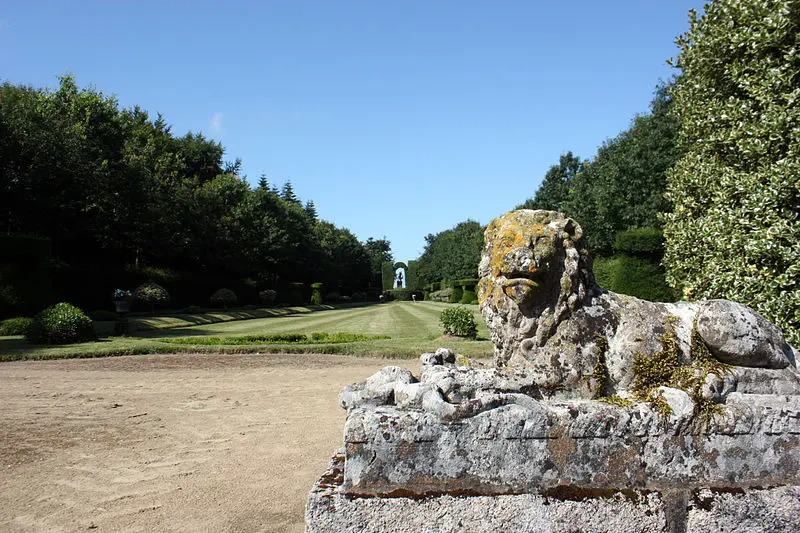
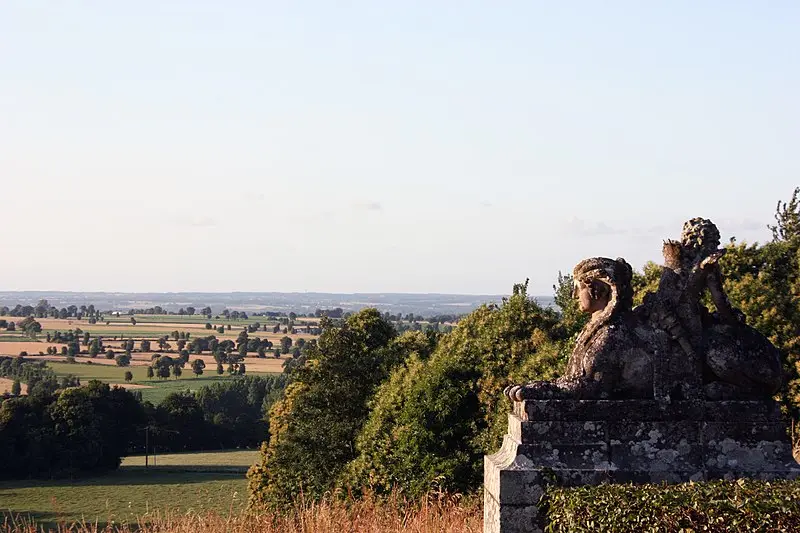
The castle, built in 1680 by M. de Caradeuc, was occupied by the Attorney General La Chalotais, who had the Jesuits of Brittany expel. This rectangular building includes a main body with a central pavilion and a side pavilion to the east. In 1820, modifications were made, with the addition of a triangular pediment to the front of the central pavilion, which presented the Caradeuc and Martel coats of arms, as well as the motto "Arreste Ton Coeur". In the middle of the 19th century, the castle was dissociated from service buildings. At the end of the 19th century, the roofs of the pavilion were raised and a majestic staircase was built in the north. On the north facade, the rhythm of the central pavilion and the side pavilions is highlighted by their projection. The main body is symmetrical and is distinguished by a large staircase with three -flying. The French garden is surrounded by moat. In 1898, the architect Mellet gave the building its current appearance, while the André landscape surrounded it with a large park with French gardens, terraces, paths and roundabouts decorated with factories, as well as a wooded area. This park is one of the largest in Brittany, combining formalism and flexibility. Little altered thereafter, this landscaping is distinguished by the quality of its furniture and its statuary, including Renaissance style porticoes, sculptures of the 17th and 19th centuries, columns of the Halles de Combourg, as well as a statue of Louis XVI.


