
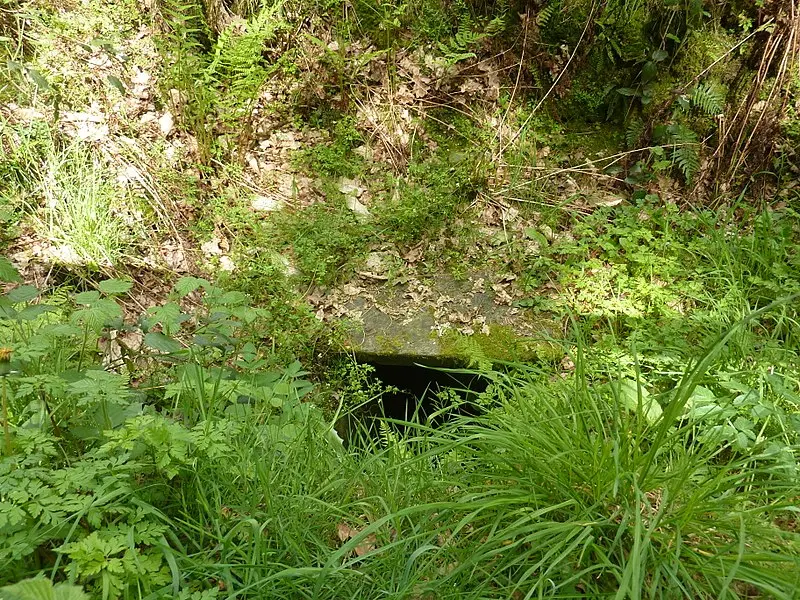
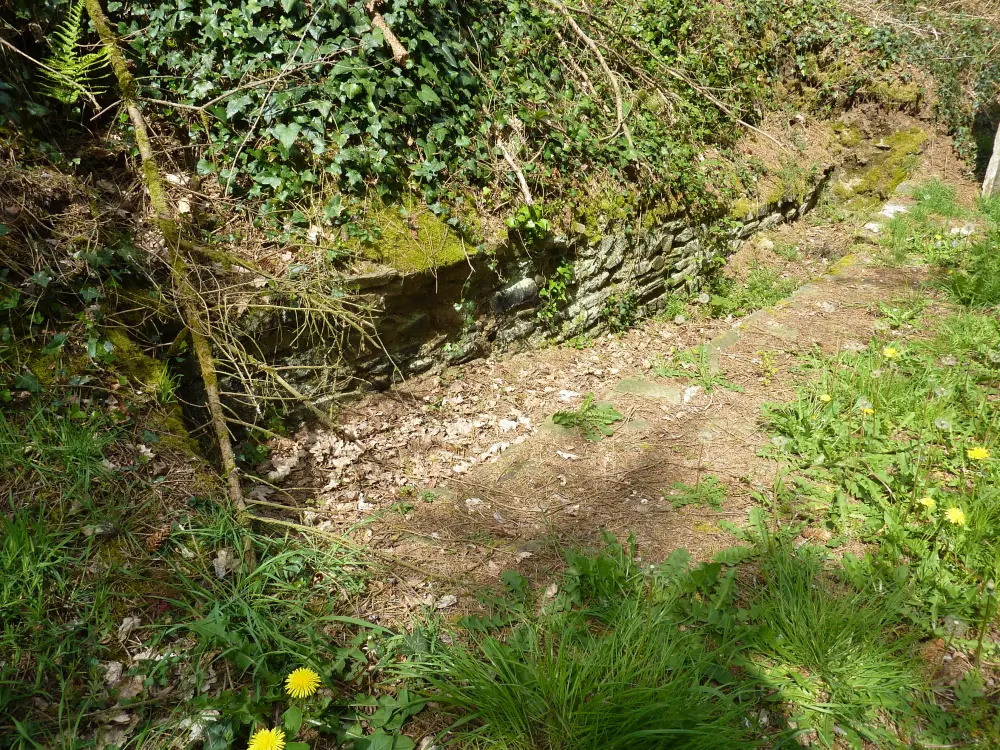

Le Moustoir : Kervoaguel tunnel (also in commune of Paule)
Côtes-d'ArmorReference
PA22000019
Latitude
48.266684
Longitude
-3.469083
Address
1 Trougaou 22340 Paule
Construction era
Gallo-romain
Protection date
2005/03/25 : inscrit MH
Protection cause
La partie rectiligne du tunnel, principal vestige de l'aqueduc gallo-romain de Carhaix, débutant au hameau de Kervoaguel à Le Moustoir et se terminant à 300 mètres à l'ouest du hameau de Trougaou à Paule, comprenant le tunnel proprement dit, le terrain situé au dessus, ainsi qu'une bande de terre (sol et sous-sol) de 10 mètres de part et d'autre de celui-ci (cad. Le Moustoir ZI 4, 9, 17, 20 à 22 ; ZH 73, 75 à 77 ; voies communales n° 2, n° 13, n° 16 ; Paule ZC 2) : inscription par arrêté du 25 mars 2005
Description
The aqueduct extends over 27 km from its catchment point to the eastern end of the black mountains. Due to the weak slope, the Thalweg of Trougaou is bypassed by a zigzag layout which goes from east to west over 180 meters, before heading north and pass under the hill. The construction of a tunnel thus avoids the detour and reduces the length of the seven km aqueduct. Restoration works are carried out during the Sevings Dynasty, between 193 and 235 AD. The aqueduct was ultimately abandoned at the beginning of the 4th century.


