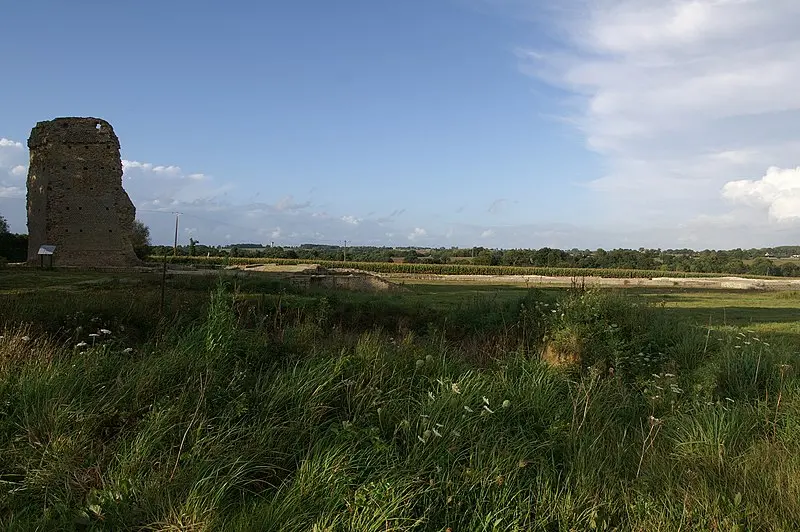
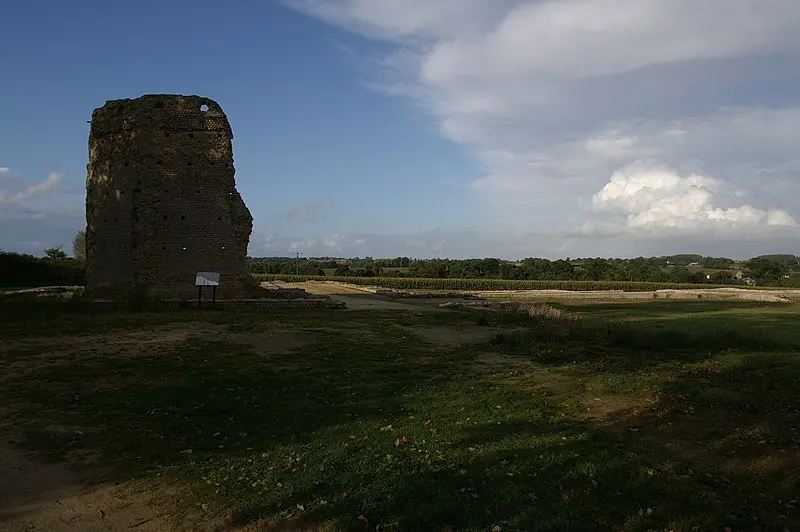

Corseul : Gallo-Roman site of Haut-Bécherel-Temple of Mars
Côtes-d'ArmorReference
PA00089068
Latitude
48.471776
Longitude
-2.146368
Address
5176 F Le Haut Becherel 22130 Corseul
Construction era
Gallo-romain;milieu 1er siècle;16e siècle
Protection date
1840 : classé MH ; 1997/02/24 : classé MH
Protection cause
Ruines romaines dites Temple de Mars : classement par liste de 1840 Site gallo-romain, comprenant les vestiges archéologiques enfouis et en élévation (à l'exception de ceux classés en 1840 sous la désignation "Temple de Mars à Corseul") et parcelles YC 42 à 44 et 106 les contenant ainsi que la ferme du 16e siècle jouxtant le mur sud du sanctuaire antique : classement par arrêté du 24 février 1997
Description
Classified as a historic monument since 1840, the Roman Tower of Haut-Bécherel revealed, thanks to the excavations of the 19th century, that it was the cella of a large Gallo-Roman temple extending over more than a hectare. The plan established in 1869 was confirmed by air prospecting and surveys carried out recently. The sanctuary was erected in one go, probably in the middle of the 1st century AD, and continued to be used until the end of the 3rd century. This ancient cult site, by its dimensions, is unique in Brittany. It includes an octagonal cella and a courtyard surrounded by a gallery on three sides, with an area of the Fanum reaching 90 m by 80. At the southeast corner of the site is a farm dating from the 16th century.