

Reference
PA00135535
Latitude
49.2376
Longitude
1.2478
Address
203 La Côte du Moulin 27430 Andé
Construction era
15e siècle;milieu 18e siècle;1er quart 20e siècle
Protection date
1995/02/06 : inscrit MH partiellement ; 1995/10/12 : classé MH ; 2008/05/16 : inscrit MH
Protection cause
Les deux piles sur lesquelles repose le moulin ; les éléments subsistants de la maison du meunier (cad. A 70) : inscription par arrêté du 6 février 1995 - Le moulin, y compris son mécanisme (cad. A 70) : classement par arrêté du 12 octobre 1995 - Le parc du moulin en totalité avec : la clôture ; l'ensemble des aménagements de jardins : rocailles, murs de soutènement, kiosques, belvédères, ponts, escaliers, serres, embarcadère ; l'orangerie dans ses dispositions d'origine ; les plantations et les sols des parcelles A 67 à 69, 71 à 73, 76, 120, 121, 1333, 1351, 1569, 1612 à 1617, lieudit Côtes du Moulin et Clos des Pins) : inscription par arrêté du16 mai 2008
Description
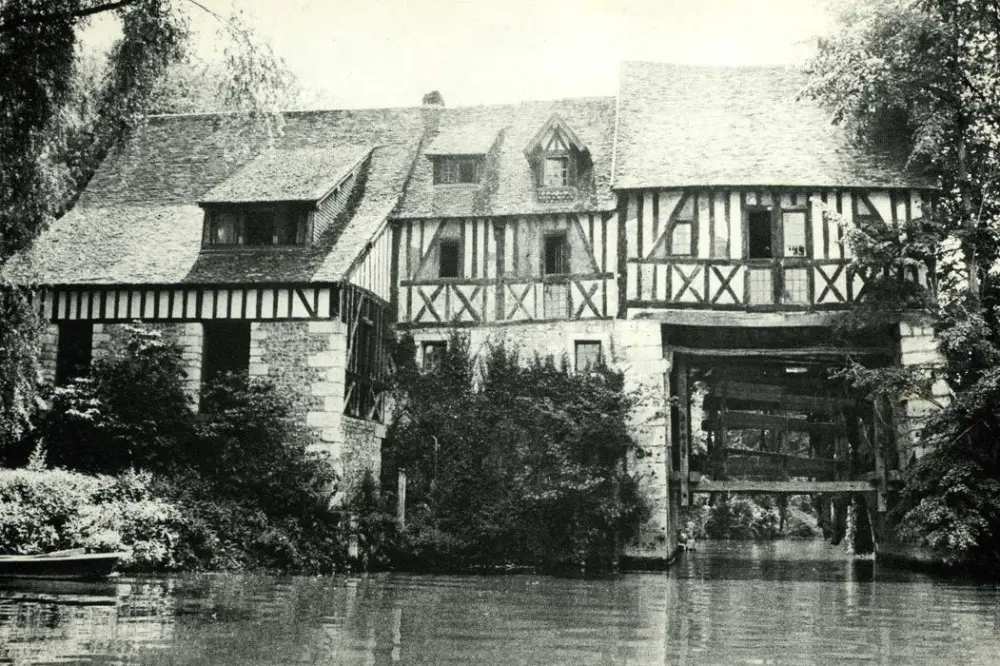
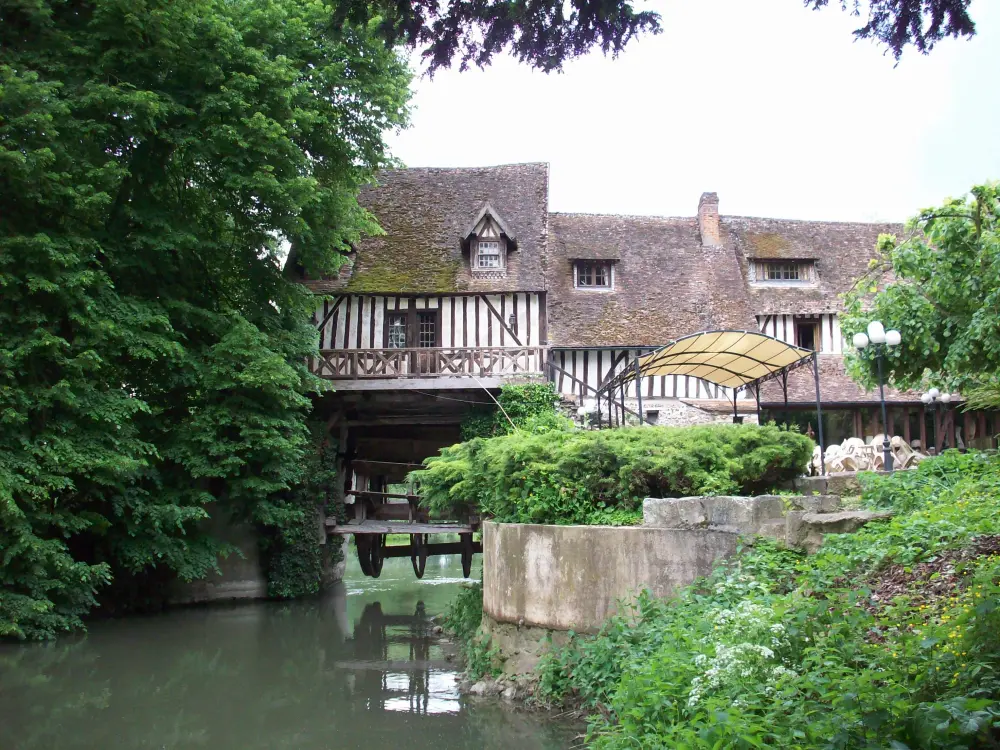
The mill, probably built in the middle of the 18th century, is based on two pillars dating from the 15th century. The Moulin d'Andé, of the hanging wheel type, is located above an arm of the Seine and is supported by medieval stone columns, surmounted by a wooden structure. Its wheel is installed below the mill floor, in a horizontal setting maintained by vertical tie rods. Wooden cylinders to adjust the position of the tie rods through the floor in order to lift or lower the wheel as a function of the water level. To the south, is the Meunier house, built in a similar way. The mill has been mentioned in the archives since the beginning of the 15th century and has been described in detail in a contract of 1691, its operation having been attested until 1861. Today, it serves as a cultural meeting center and represents a unique example in France, or even in Western Europe, of this type of delicate production of production, preserved in an exceptional state of conservation. In addition to the wheel, currently being restored, the mill has kept its grinding room with all of its mechanism, mainly in wood: screw cylinders, tie rods, tree, large gear and grinding wheel on their base.


