
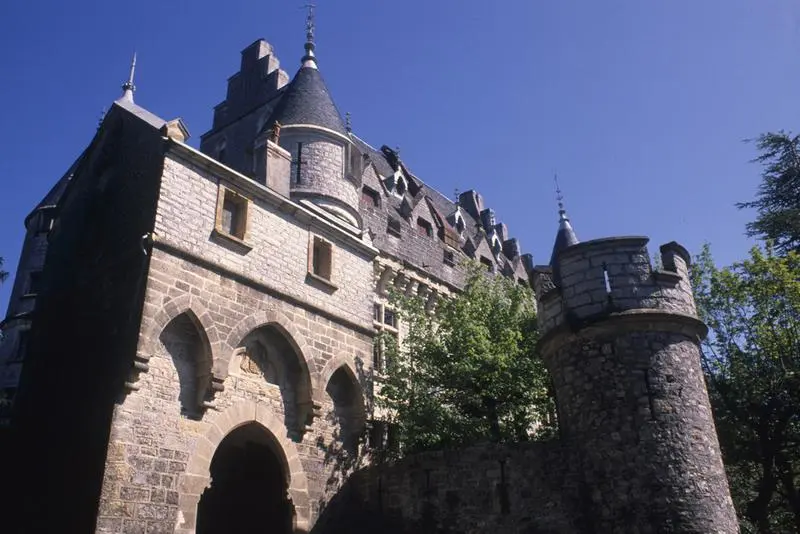

Montdardier : Castle
GardReference
PA00103078
Latitude
43.92815909
Longitude
3.59278947
Address
Place de la Poste 30120 Montdardier
Construction era
3e quart 19e siècle
Protection date
1989/02/20 : inscrit MH
Protection cause
Château, y compris les décors intérieurs (cad. C 43) : inscription par arrêté du 20 février 1989
Description
Montdardier controlled access to regional sanctuaries in the Middle Ages. The pilgrims going to Saint-Jacques left their mark, just like the Romans before them. This place has served as a defensive site for a long time. The presence of a fortress is documented there from the 12th century. During the Hundred Years War, Montdardier was raised to the status of royal fortress. In 1365, work was carried out to make it able to resist the English from Guyenne. In 1469, the fortress was destroyed by a troop in the service of the Count of Armagnac. During the wars of religion, a new act of looting took place in 1563. At the end of the 16th century, the restoration efforts of the castle were undertaken. Religious conflicts led the Duke of Ventadour to order the demolition of the fortifications in 1609, but this was only partially achieved. A new restoration began in 1703, but another looting followed by a fire ravaged a large part of the fortress in 1792. After the destruction caused by the Revolution, the castle was abandoned and became a ruin. Around 1860, Fernand de Ginestous asked Viollet-le-Duc to design plans for his restoration. A new fortress has been completely rebuilt in the medieval style characteristic of the architect, with the exception of a 15th century tower maintained as a witness to the past, as well as certain bases based directly on natural rock blocks.