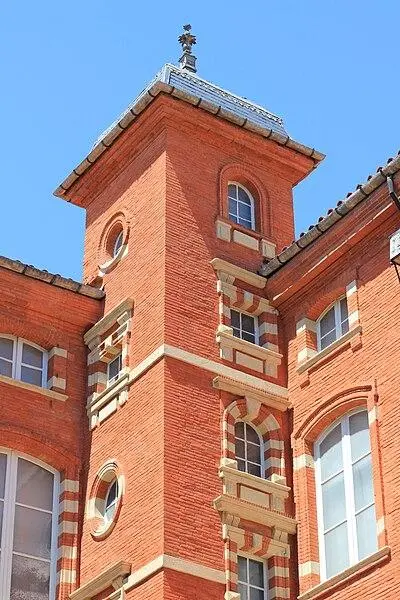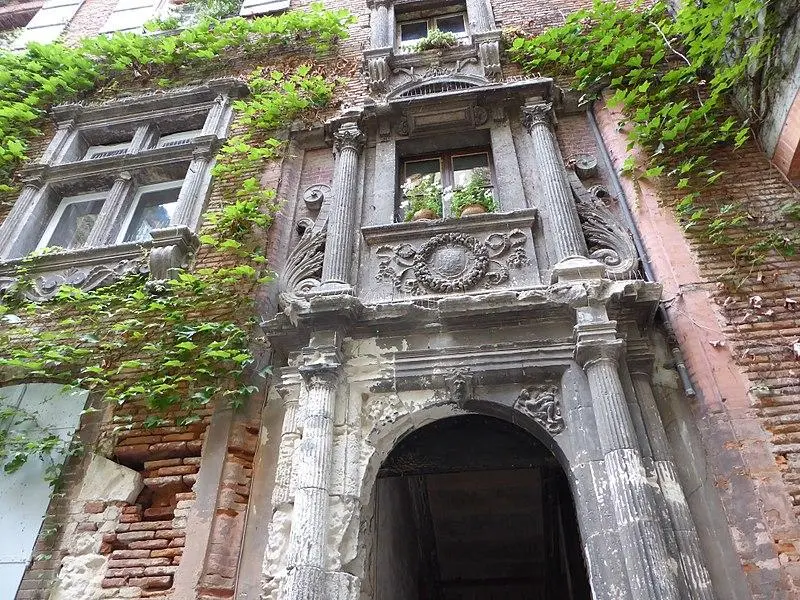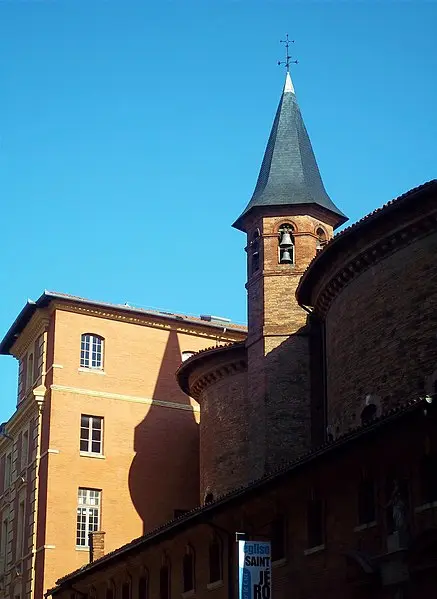
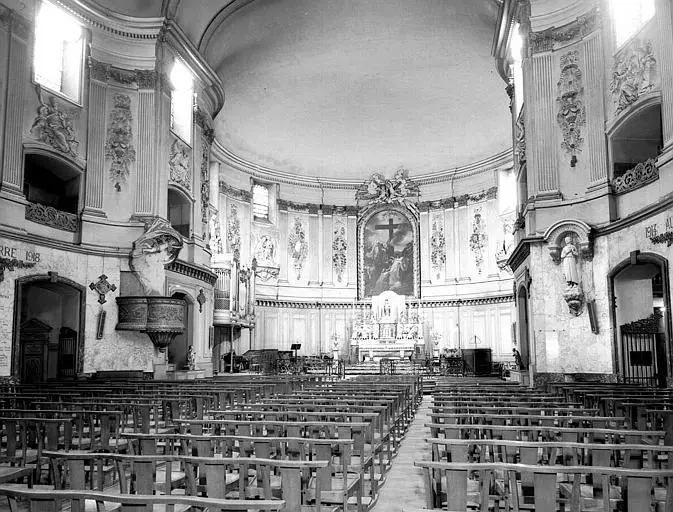
Toulouse : Former chapel of the Bleus penitents, currently Saint-Jérôme church
Haute-GaronneReference
PA00094500
Latitude
43.6031
Longitude
1.446389
Address
2 B Rue du Lieutenant Colonel Pelissier 31000 Toulouse
Construction era
1ère moitié 17e siècle;18e siècle;1er quart 19e siècle
Protection date
1980/03/06 : classé MH
Protection cause
Chapelle des Pénitents Bleus (ancienne) (cad. AB 261) : classement par arrêté du 6 mars 1980
Description
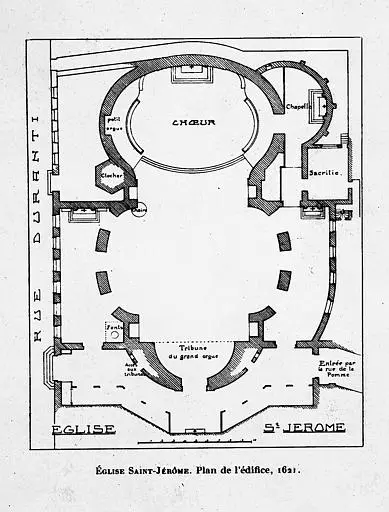
The chapel was built from 1622 by the architect Pierre Levesville. Its plan has an oval shape cut by a rectangle, with two opposite apses. The wooden vault of the nave was decorated by Pierre Fournier for the gilding of the ribs and the salting jeans for the painting of the sections. In 1734-1735, Marc Arcis created ten bas-reliefs representing the theological virtues, enriched with a setting of musicians and trophies. After having served as a temple during the revolution, the chapel became a parish church in 1802. In 1805, Jacques Pascal Virebent modified the interior by extending the choir using the penitent meeting room, and a Toulouse -style bell tower was built. In 1858, six bas-reliefs were added to the choir to complete those of Marc Arcis. From 1860 to 1865, the Italian painter Céroni carried out the decor, and in 1875, G. Pibou painted the "triumph of Saint-Jérôme" on the vault.