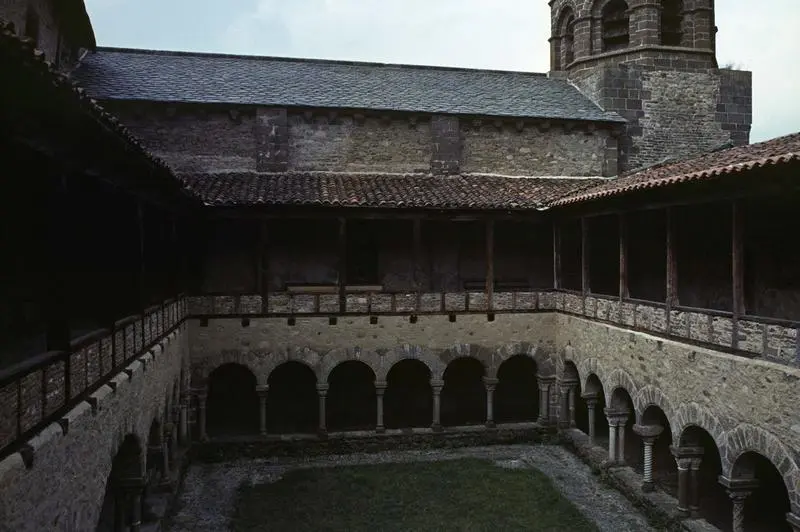
Lavaudieu : Former Saint-André-de-Lavaudieu Abbey
Haute-LoireReference
PA00092685
Latitude
45.2623106
Longitude
3.45456719
Address
43100 Lavaudieu - France
Construction era
12e siècle;16e siècle;17e siècle;18e siècle
Protection date
1862 : classé MH ; 1932/04/19 : classé MH ; 1958/01/10 : classé MH ; 1958/03/03 : inscrit MH ; 1966/12/20 : classé MH ; 2001/04/09 : inscrit MH
Protection cause
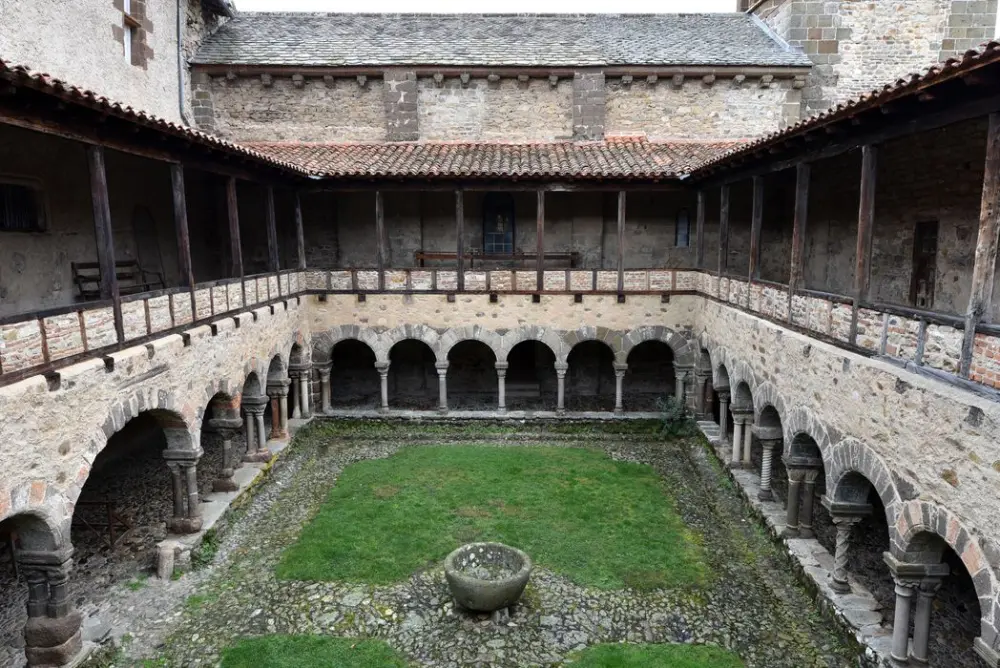
Le cloître : classement par liste de 1862 - Le réfectoire orné de fresques : classement par arrêté du 19 avril 1932 - Les ruines des bâtiments abbatiaux (cad. E 198, 210 à 212, 216) : classement par arrêté du 10 janvier 1958 - Les ruines des bâtiments abbatiaux (cad. E 216p) : inscription par arrêté du 3 mars 1958 - L'ancien logis de l'Abbesse (cad. E 201, 203) : classement par arrêté du 20 décembre 1966 - Les jardins de l'abbaye (cad. 190 à 192, 1765 à 1768) : inscription par arrêté du 9 avril 2001
Description
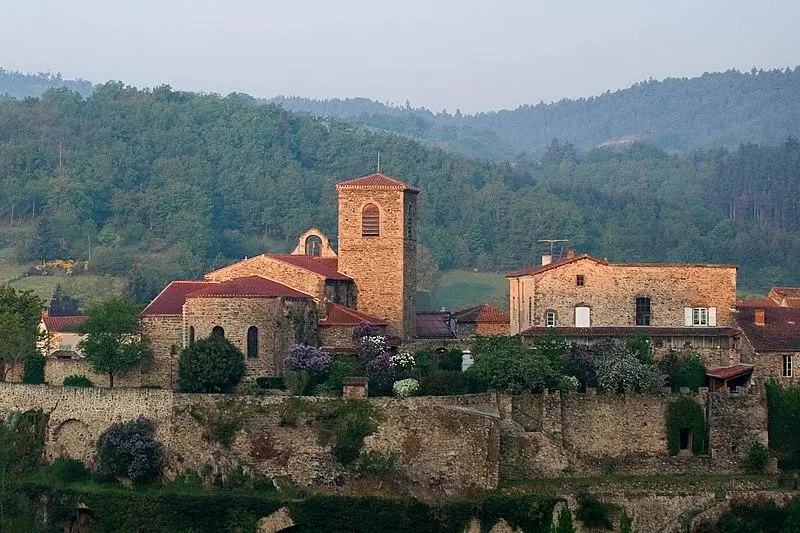
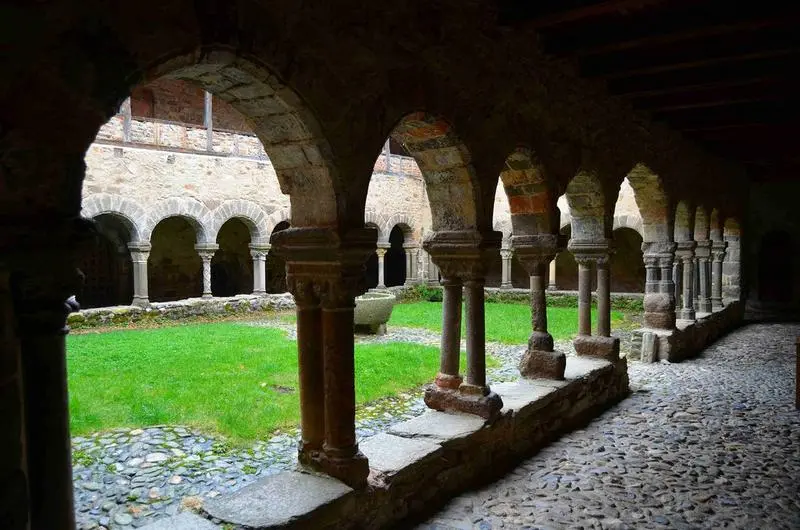
The priory, which follows the rule of Saint Benoît, was established in 1067. We can still admire the cloister and the abbey church in Romanesque style. Only the refectory of the old abbey has been preserved. The abbey buildings were probably built in the 17th century and redeveloped internally in the 18th century, with the addition of chimneys and joinery. The old abbess housing reflects the decorative style of the 18th century, with its salons and rooms with marked parquet floors, French ceilings, and period furniture. The refectory is embellished by a fresco dated from the end of the 12th century, byzantine style with Syrian influences. Romanesque frescoes, covered between the 16th and 19th century, also embellished the triumphal arch (crucifixion; Dormition of the Virgin; Saint-André; Small characters), the north nave (evangelist; passion; flogging; Portement de Croix; Crucifixion; Grave; Disting of the Cross) and South (Annunciation; unidentified; The entire north wall has a Gothic style and bears the date of 1315 on a cartridge. There is an Italian influence in the allegory of death. Besides the grave, there is a representation of the legend of Sainte-Ursule and the eleven thousand virgins, killed by the Huns, which was repainted in the 16th century at the site of a scene of 1315 damaged by humidity. The property of the Abbey, before belonging to the State (Ministry of Culture), was transferred to the municipality via an agreement signed on June 28, 2007.