Reference
PA00091469
Latitude
47.331056
Longitude
-3.1425
Address
6056 La Belle Fontaine 56360 Le Palais
Construction era
17e siècle
Protection date
1990/09/13 : classé MH
Protection cause
Aiguade Vauban, y compris la terrasse et la digue (cad. ZL 26) : classement par arrêté du 13 septembre 1990
Description
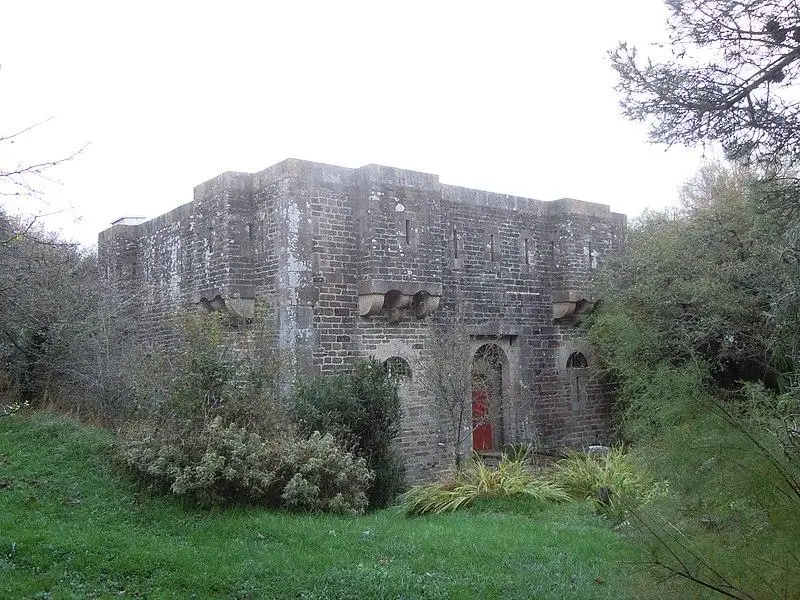
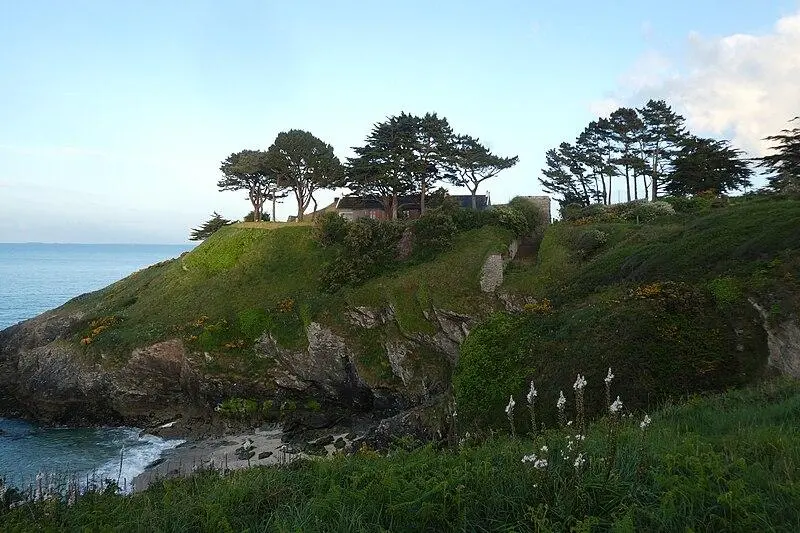
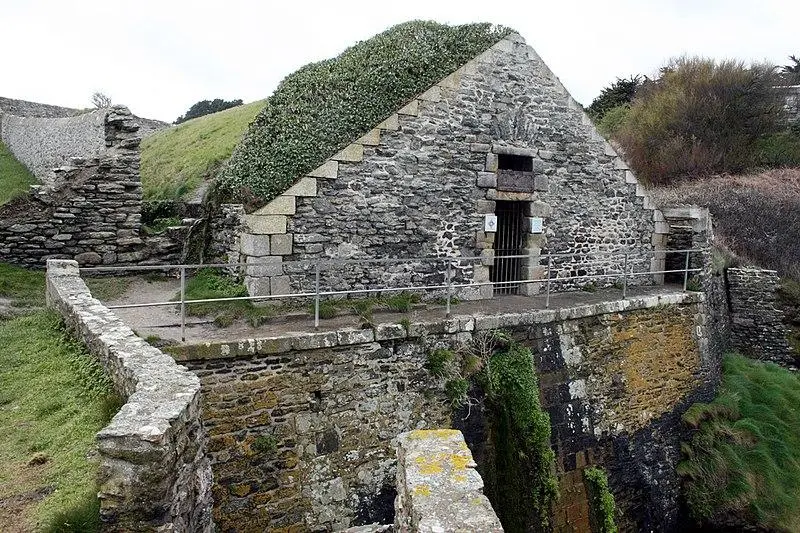
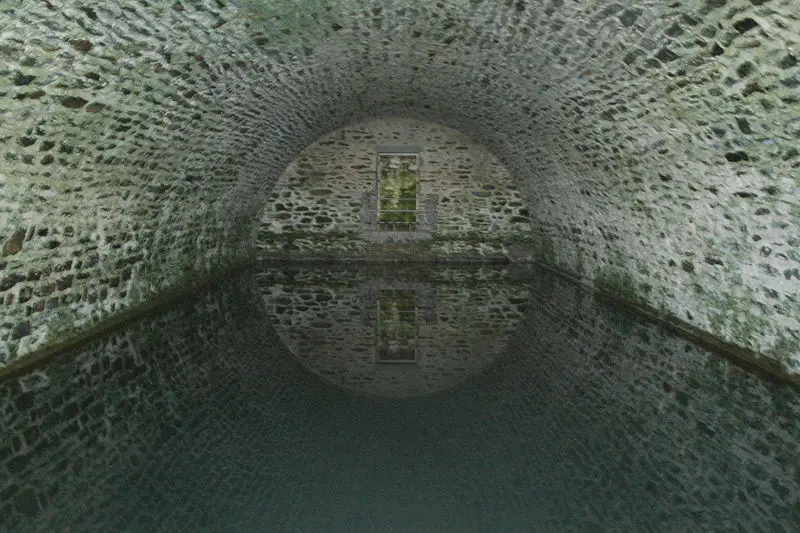
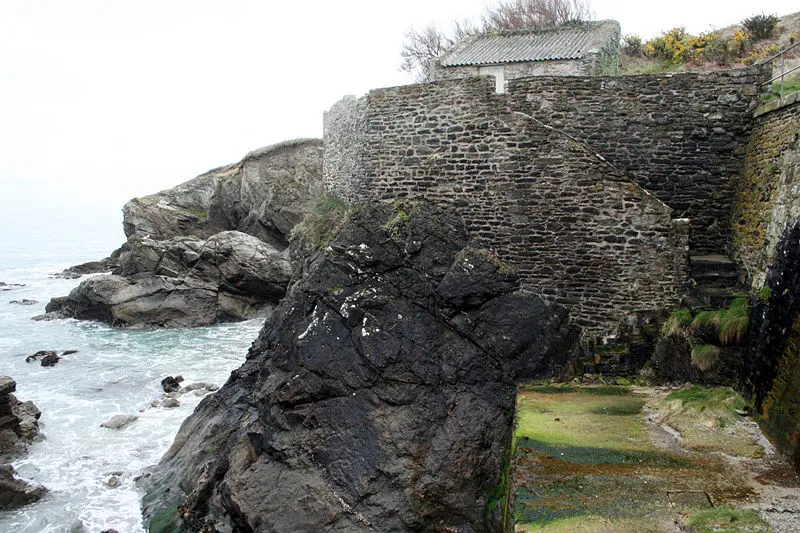
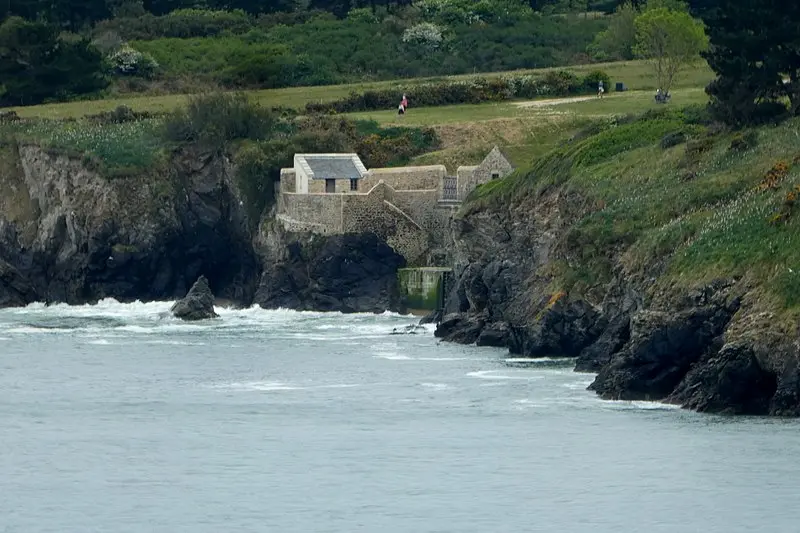
The beautiful fountain is a coastal military installation which contains a tank of almost 900 m³ of water. Its construction has probably been ordered by Vauban to allow the ships of the fleet to easily refuel in fresh water. It is a rectangular rubble building, covered with a two -sloping roof, covered with earth and vegetation. Inside, there is a vaulted room which serves as a reserve of water. A fence wall that is not very thick in rubble surrounds the building. On the sea side, the wall which holds the water from the tank extends to a terrace which is a few dozen centimeters above sea level. We can observe saber marks in the masonry, which indicates that there have been modifications or adjustments in construction over time. The low terrace rests on a protective wall against the sea, which acts as a quay so that small boats can approach high tide. Two protruding stone conduits on the wall constantly provide fresh water to fill barrels. The design of the sea protection wall is striking: size stone masonry is supported at the base of the cliff by horizontal piles driven into the ground. After installing the piles, the holes were blocked with stones, some of which are still visible today. The joints and seals use a waterproof mortar, made up of pounded lime and terracotta.