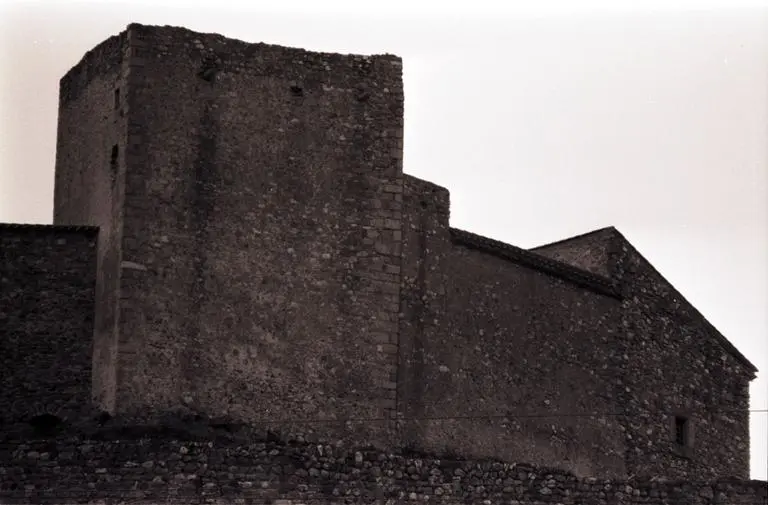
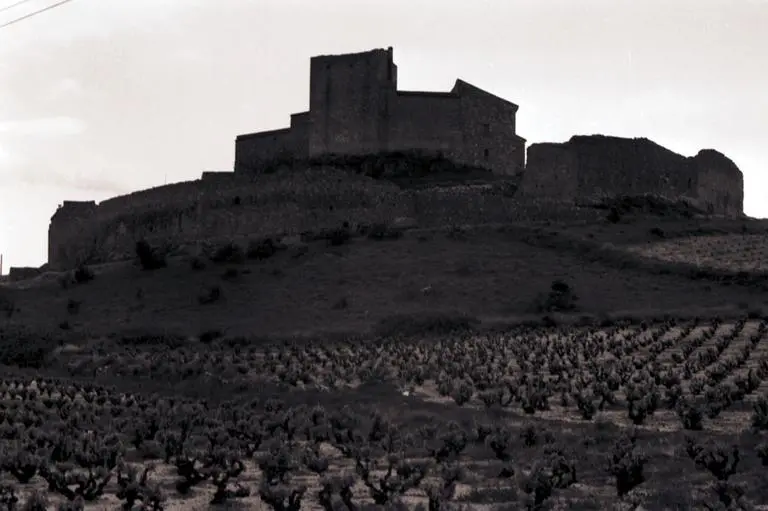
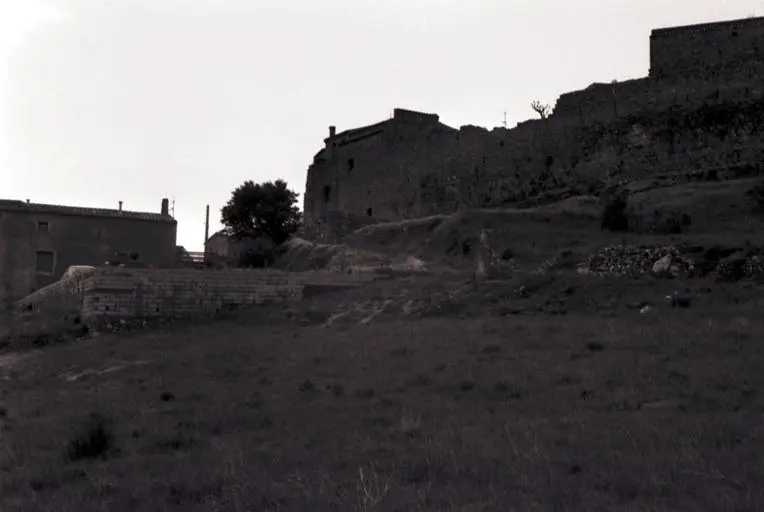
Montalba-le-Château : Remains of the castle and fortified enclosure
Pyrénées-OrientalesReference
PA00104048
Latitude
42.69623409
Longitude
2.55896077
Address
2 Rue des Remparts 66130 Montalba-le-Château
Construction era
12e siècle;13e siècle
Protection date
1984/12/21 : inscrit MH
Protection cause
Château et enceinte fortifiée (vestiges) (cad. B 1638) : inscription par arrêté du 21 décembre 1984
Description
The castle is mentioned in the year 1020. The fortress of Montalba offers a notable interest in terms of military art, because it illustrates what would have been a feudal castle, similar to Pierrepertse, if it had not been transformed into a royal fortress after the reign of Saint-Louis. The polygonal enclosure here has no work to flank, and in the center, residential additions have made it possible to keep the large tower of the keep as well as two round towers. The outer enclosure is made up of seventeen straight sections of various lengths. The walls have two levels of archès. Access to the lices is today by a carriage ramp and an opening to the northwest. To the east, another path leads to a fortified door flanked by a square belfry. A modern chapel of service has been added in part of the Lord's residential buildings, south-east of the castle. On the left of the chapel, a circular tower, of which only the lower level remains, supports a building in a square of square shape. It is difficult to determine the age of the square tower, whose crenellated coronation seems clearly older than the 12th century. In the south of this tower, the much more recent residential buildings lean there without connection, while in the North are other constructions of military origin. The round towers only have short wide slit archères, visibly dating from the 12th century. The outer enclosure includes more than fifty archès, most of them being short and dating from the period of the Romanesque Poter of the North Front (12th century). Some archères of the upper level of the walls are longer and could go back to the middle of the 13th century.