Le Havre : Tobacco factory
Seine-MaritimeReference
PA00100715
Latitude
49.48895653
Longitude
0.11567295
Address
10 Quai Casimir Delavigne 76600 Le Havre
Construction era
2e quart 18e siècle;3e quart 18e siècle;1er quart 19e siècle
Protection date
1946/12/02 : classé MH
Protection cause
Façade : classement par arrêté du 2 décembre 1946
Description
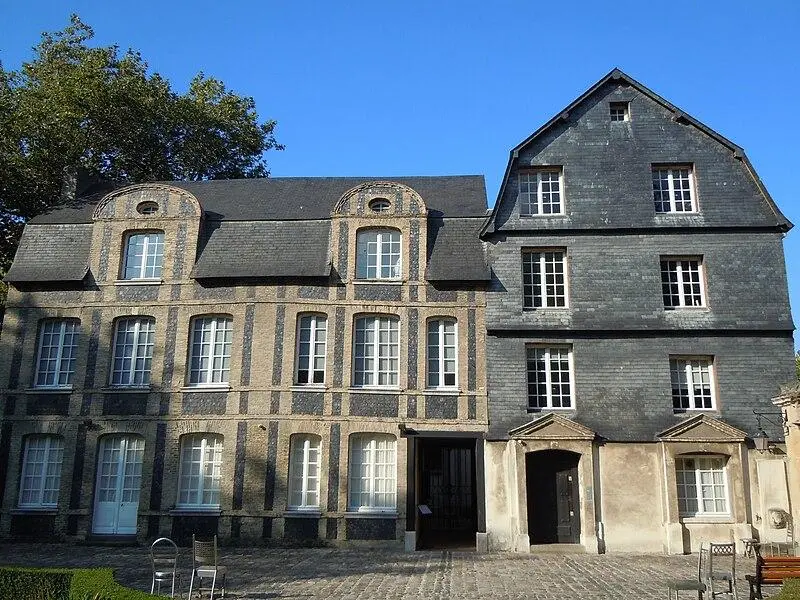
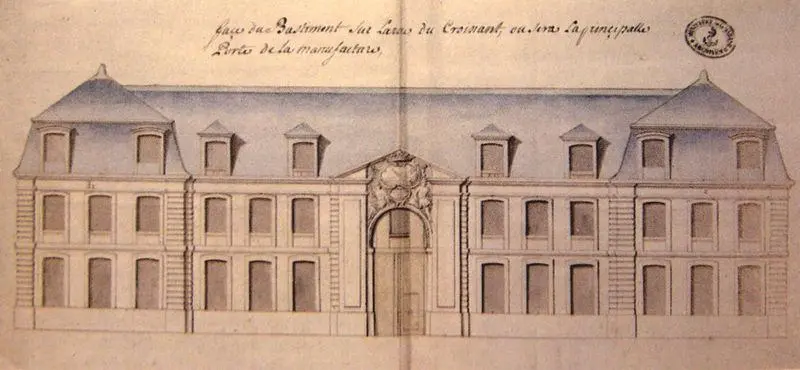
In 1724, the India Company established a tobacco factory in Le Havre. Between 1724 and 1728, the old palm play room served as a production workshop. The new factory was built from 1726 according to the plans of Jacques Martinet, royal engineer, and Gabriel, first engineer of bridges and roads. It is designed in the shape of a quadrilateral around a courtyard and includes stores and offices on the ground floor, as well as a workshop upstairs. An aqueduct provides water from the Saint-François fountain. A second building was built from 1728 around an honor courtyard, with a portal sporting the coat of arms of the India Company and two commerce symbols. In 1745 and 1765, a department store and a third building were erected respectively. The Manufacture closed its doors in 1791 and was sold to the company in commanditis Delafraye, Clarisse and Donguemere. In 1811, the production and sale monopoly was awarded to the Régie des Rights gathered, which became the management of indirect contributions in 1814, and the manufacture was acquired by the Imperial then Royal Company. In 1822, a fourth building was erected on the Quai de Lamblardie. In 1830, the factory received its first steam engine, set up by engineer Haleroft. In 1856, she enlarged her facilities by annexing the neighboring warehouse. In 1857, Mazeline set up a horizontal machine of 30 horsepower. In 1862, the engineer Demondésir provided roasting and chopper. Following the bombings of 1944, there is only the factory remains of ruins, which will ultimately be demolished in 1960. Only the monumental door in Caen and Caumont stone, dismantled, is preserved.