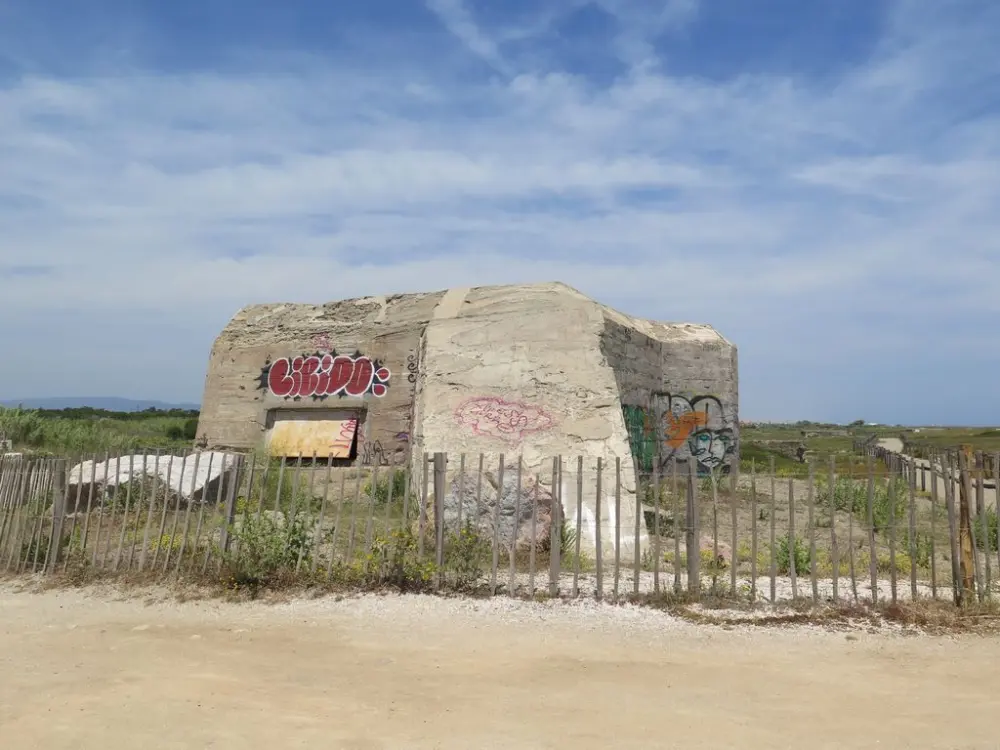
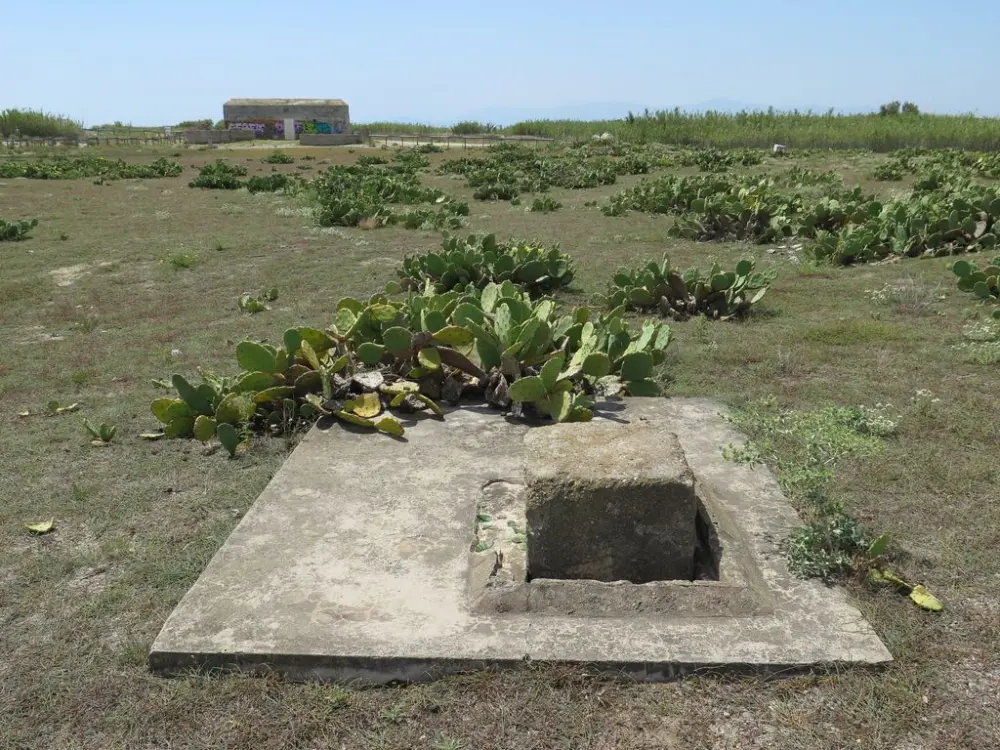
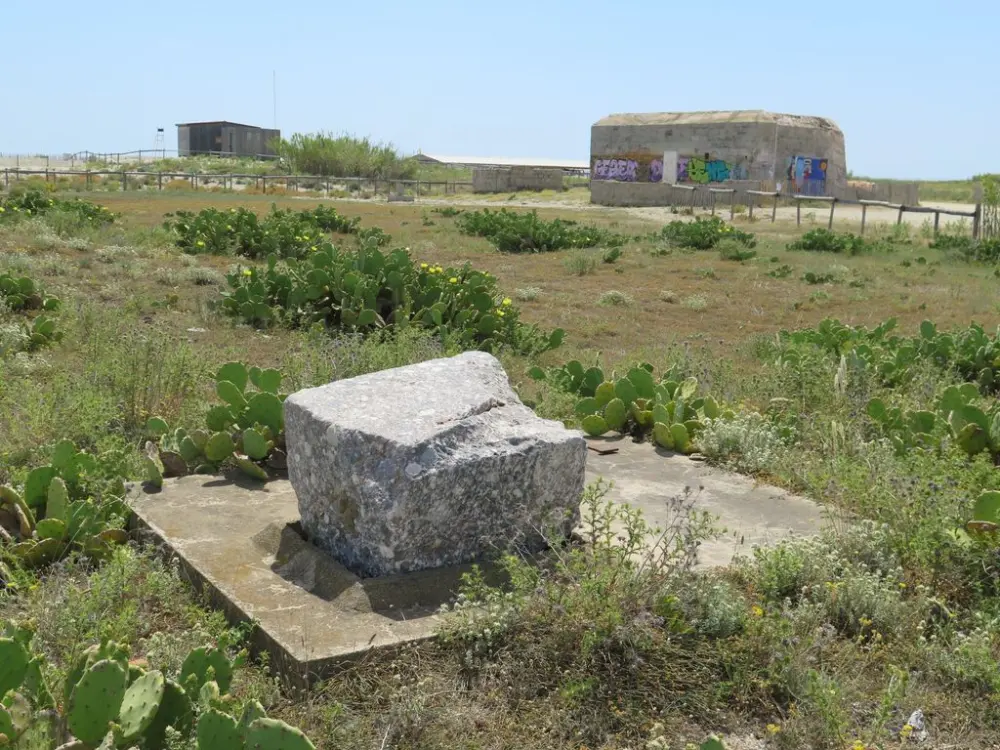
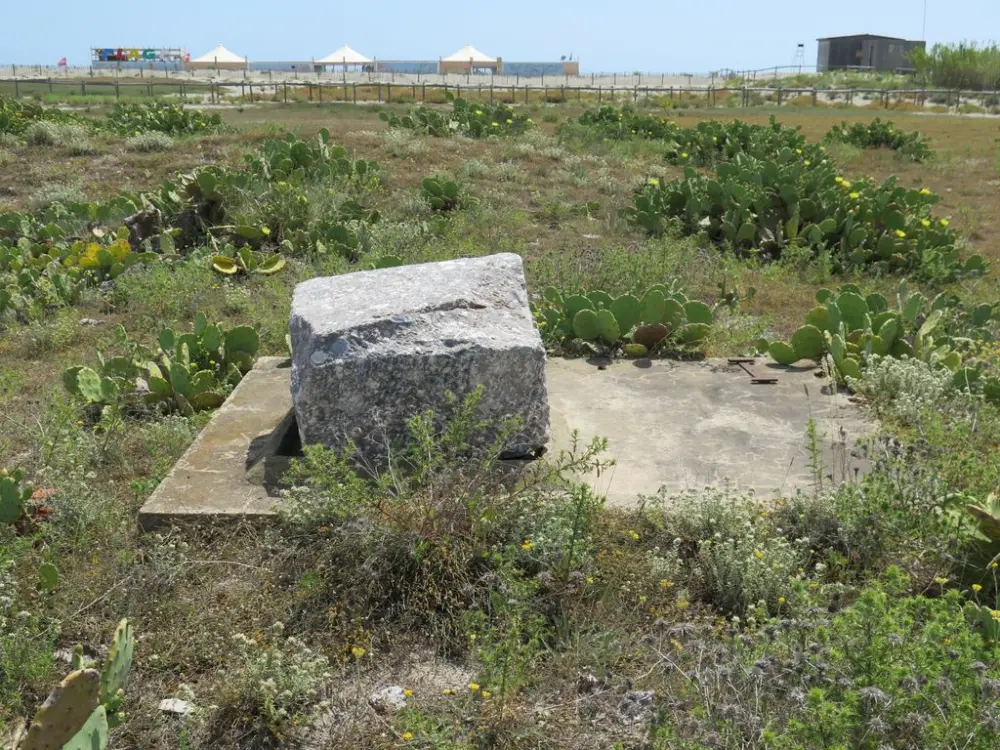
Torreilles : German support point LGS082
Pyrénées-OrientalesReference
PA66000058
Latitude
42.773659
Longitude
3.037714
Address
66440 Torreilles - France
Construction era
20e siècle
Protection date
2019/12/10 : inscrit MH
Protection cause
Le point d'appui allemand Lgs082, à savoir 14 constructions : 1 Ringstand Bf236, 4 Ringstand Bf58c, 5 Bf52a, 3 citernes, 1 casemate R612 (appelée communément blockhaus de Toreilles), en totalité, y compris son sol d'assiette, tel que délimité en rouge sur les plans annexés à l'arrêté, sis lieu-dit Camps de la Ribera (cad. AV 42, 43 et partiellement sur le Domaine maritime public) : inscription par arrêté du 10 décembre 2019
Description
The defeat of France in the face of the German invasion during the French campaign in the spring of 1940 led to an armistice between France and Germany signed on July 22, 1940. This agreement divided France into an occupied area in the north and a free zone to the south, administered by the Vichy regime, separated by a strictly controlled line of demarcation. With the Allied landing in North Africa on November 8, 1942, the Germans feared an imminent landing Allied on the French Mediterranean coast. They then implemented the Anton II plan to occupy the "free" zone and secure the Mediterranean coast. On November 11, 1942, they crossed the demarcation line to reach the coast and the Pyrenees. Subsequently, the Germans began to establish two lines of defense in the department of the Pyrénées-Orientales: 1. The first, called "Südwall" or Mittelmeerwall (Mediterranean wall), looked like the Atlantic Wall. From Cerbère to Barcarès, it was made up of large maritime batteries and other smaller constructions, such as blockhouses, mainly equipped with cannons oriented towards the sea to prevent an Allied landing. The most important fortified area was Port-Vendres, the last deep water port on the coast. This Mediterranean wall was little used, with only a few gunshots, including one against a submarine of the free French naval forces off Port-Vendres. The main defensive constructions were located in Barcarès, Torreilles, Sainte-Marie-la-Mer, Canet-en-Roussillon, Argelès, Collioure, Banyuls, and especially Port-Vendres, where there were also installations such as observation posts, shelters, anti-tank and batteries, as well as a retractable anti-sous-marin net at the entrance to the sixth flotilla. 2. The second line, known as "Speerlinie Pyrenäen" (Fortified Front line of the Pyrenees), extended along the Spanish border, from Hendaye to Cerbère. Less developed than the coastal line, most of its installations were located near passes and passages. The main sites included Cerbère, the Albères, Maureillas, Céret, Prats de Mollo and La Cerdagne, which housed the Citadel of Mont-Louis as well as at least eight pairs installations in the Cols de la Perche, in Eyne, Odeillo and Bolquère. The Perthus had the highest concentration of defensive structures with six Char turrets around the Fort de Bellegarde. The department was quickly equipped with nearly 150 "support points", made up of a command post and a barrel. These fortifications were built in record time, in a few weeks, either in reinforced concrete or in todt rubble, often by German teams (Todt organization, Müller company, Bauleitung ...) or by French companies with volunteers or requisitioned. At the end of the war, the hasty departure of the German occupants took place in August 1944, only the quays of Port-Vendres having been energized. A few dozen German soldiers were interned at Rivesaltes camp until the end of 1947. German constructions were very normalized. However, the German fortifications in the Mediterranean were put in place later and less continuously, complicated by the sandy nature of the coast. Blockhaus, bunkers and batteries, which all required artillery, were armed concrete defense structures. A wide variety of defensive constructions existed, with approximately thirty different types, including casemates, management positions, attic, shelters for ammunition, "ringstand" and "tobrouks" for machine guns. In all, out of the 450 to 500 works built in the Pyrénées-Orientales between January 1942 and August 1944, around 250 bunkers survived the post-war destruction and modern urbanization of the coast.