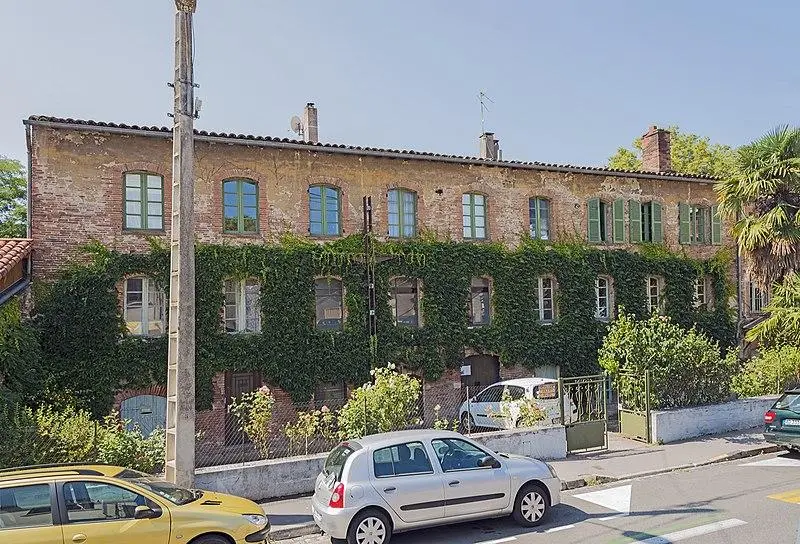
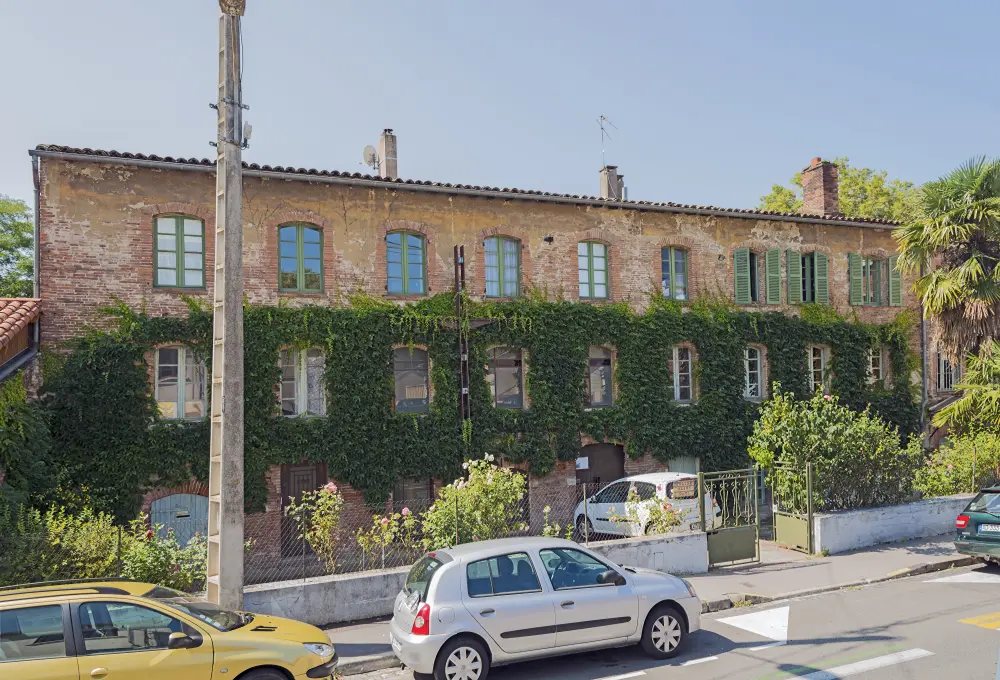
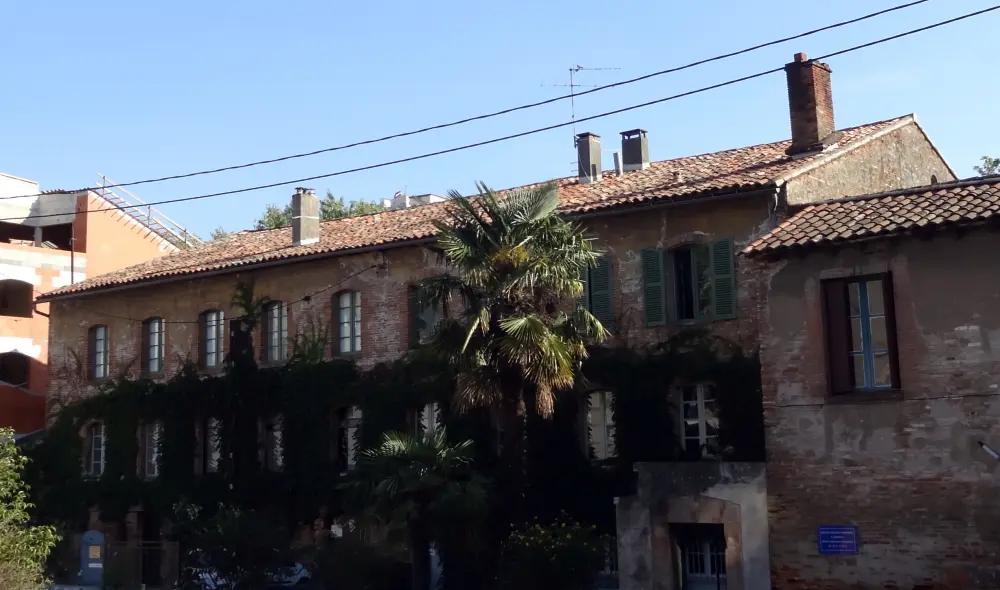
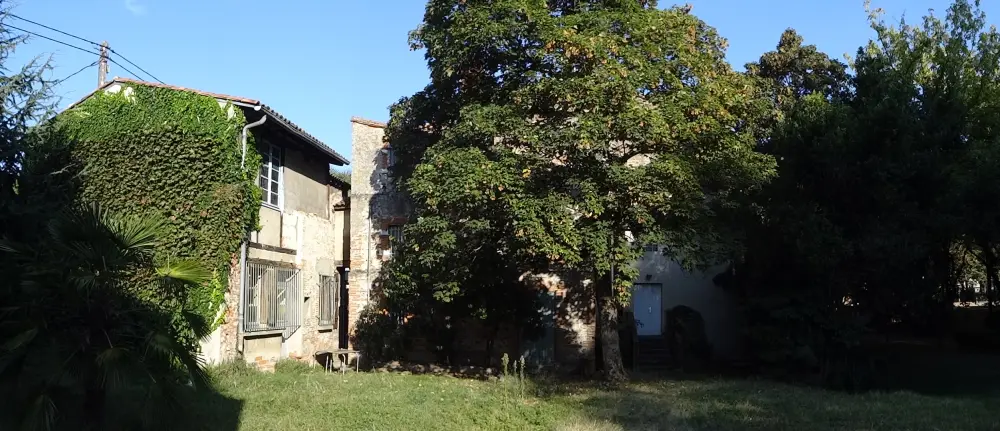
Toulouse : Starch mill
Haute-GaronneReference
PA00094684
Latitude
43.606059
Longitude
1.42621
Address
37 Rue des Amidonniers 31000 Toulouse
Construction era
4e quart 18e siècle
Protection date
1991/02/06 : inscrit MH
Protection cause
Façades et toitures (cad. AD 425, 426) : inscription par arrêté du 6 février 1991
Description
Restored in 1798 on the basics of a paper mill which had undergone a flood in 1790, the former hydraulic cotton spinning spinner of François Plohais was endowed with a large paddle wheel. In 1833, Edmond de Planet bought the whole and installed machines from England there. After a growth period which was interrupted by a fire in 1854, the factory, whose terrains were offered free of charge by the city, was used for various users: a pastel blue manufacturer called imperial indigotry, a laundering factory of canvases, as well as a foundry and a dyeing. In 1872, de Planet was producing agricultural machinery, while also managing a manufacture of gluten and starch products, as well as a steam and foundry construction workshop. From 1891 to 1922, the building was occupied by pasta manufacturers, Péchégut and Myquel, before being given the sisters of foreign missions, then depending on a parish. The current building dates back to the 18th century, as the shape of the doors and windows indicate, as well as the large eaves. The interior distribution has been modified and the level has been high. This building perfectly illustrates the versatile use of hydraulic energy in urban areas.