Perpignan : Ancient Carmelite Church
Pyrénées-OrientalesReference
PA00104073
Latitude
42.6964
Longitude
2.9006
Address
18 Rue des Carmes 66000 Perpignan
Construction era
14e siècle
Protection date
1906/08/13 : classé MH ; 1913/08/20 : classé MH
Protection cause
Eglise : classement par arrêté du 13 août 1906 - Portail extérieur, façade Nord, église (sous réserve du maintien des aménagements actuels) : classement par arrêté du 20 août 1913
Description
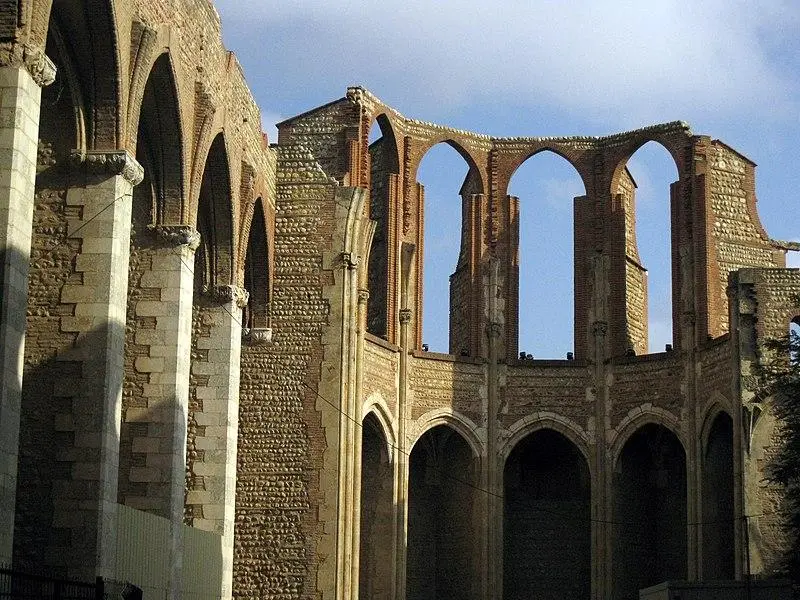
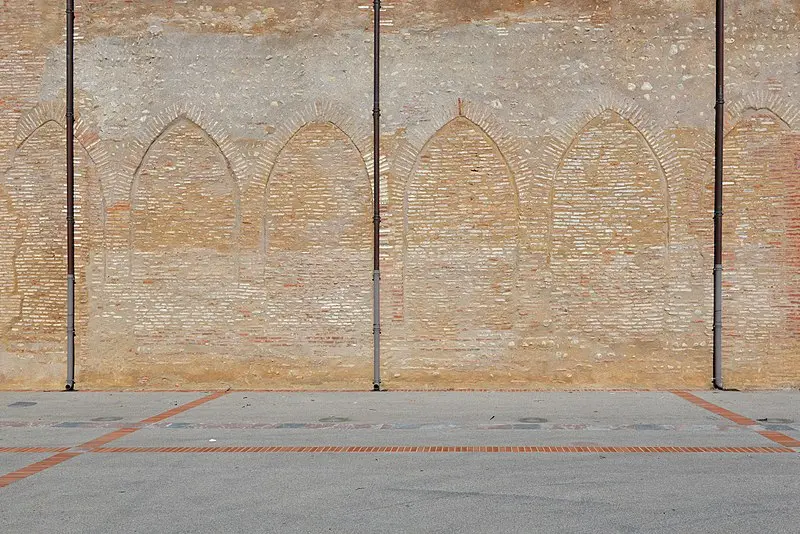
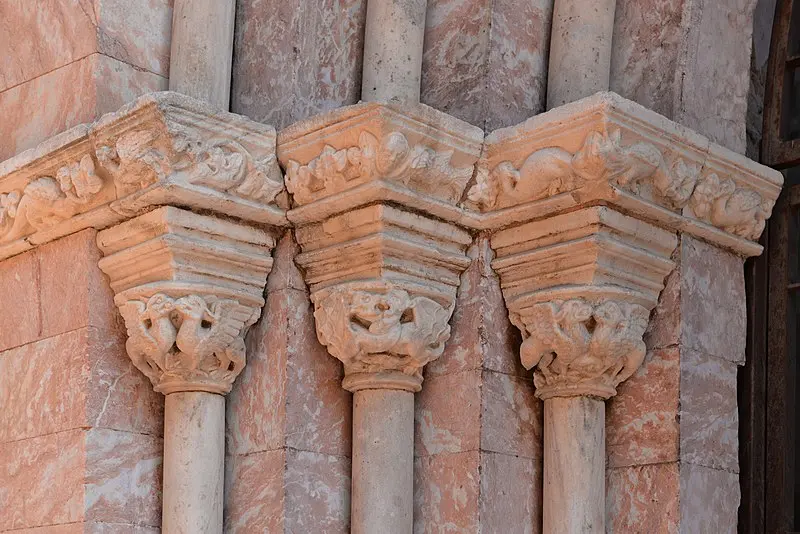
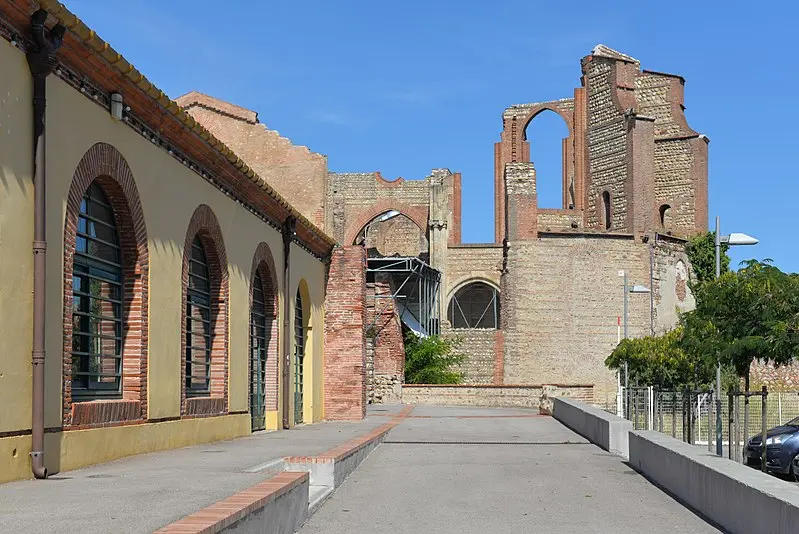
The Grands Carmes settled there in Perpignan in 1213. The cloister was erected between 1333 and 1342. In the middle of the 19th century, Baron Alexandre Guiraud had the Pierre Ensemble by Pierre to the Park of Villemartin, near Limoux (Aude) moved. The church could date from the 14th century. The old convent was transformed into a arsenal in the 17th century, and the church, separated by wooden floors, has become a deposit associated with this arsenal. During the Second World War, the Germans used the church to store tires. During the Liberation, they burned the warehouse. The church is a large Languedoc Gothic style building, with a single nave of eight spans, surrounded by chapels and with an apparent frame. It ends with a polygonal bedside also surrounded by chapels. The wall at the back of the bedside is positioned at the end of the buttresses, which allows for seven chapels inserted between them, around the seven sides of the bedside of the bedside. This configuration seems to go back to the 14th century, while the original version of the 13th century, contemporary with the nave, should not include chapels. Under the bedside, there is a crypt which has characteristics of the 15th century. The bedside is covered with a brick vault supported by stone veins. The side chapels, separated from the nave by broken arcs, are covered with vaults in crossed bricks with carved stone keys. The marble portal is decorated with capitals on which fantastic creatures are wrapped. The church once housed a platform located at the rear, composed of a wooden floor resting on two arcs in masonry, decorated with carved modillions and decorative mosaics.